Foundational Health vs. Symptomatic Farming: Breaking the Cycle of Chasing Problems
David KIng
12/5/202512 min read

Foundational Health vs. Symptomatic Farming: Breaking the Cycle of Chasing Problems
Every farmer knows the frustration. You walk your fields and find aphids. You spray. A week later, powdery mildew. You spray again. Then thrips, or mites, or blight. The season becomes an exhausting cycle of identify, treat, repeat. You're always reacting, always one step behind, and the input costs keep climbing while margins shrink.
This is symptomatic farming — treating each pest, pathogen, or disease as if it were the cause of our problems. But here's the fundamental truth: the presence of pests, pathogens, and disease is not the cause of a plant's poor health. It is the symptom of a plant that was already unhealthy.
This isn't new-age thinking. French agronomist Francis Chaboussou spent 50 years documenting this principle in his groundbreaking work on what he called "trophobiosis" — the simple but revolutionary observation that a pest starves on a healthy plant.
Chaboussou was directionally right, but his tools couldn't explain why. Between the 1990s and today, plant immunology has characterized the actual mechanisms. The phenomenon now sits inside a rigorous peer-reviewed body of work under three headings: Induced Resistance (IR), Systemic Acquired Resistance (SAR) — triggered by pathogens and running on the salicylic acid pathway — and Induced Systemic Resistance (ISR) — triggered by beneficial soil microbes and running on the jasmonic acid and ethylene pathway. A healthy plant isn't mysteriously unpalatable. It is actively running a two-tier immune system that nutrition and soil biology either enable or disable. This isn't fringe. Pieterse and colleagues laid it out in the Annual Review of Phytopathology in 2014, and Sohrabi and colleagues updated the picture in the Annual Review of Plant Biology in 2023. Chaboussou saw the pattern. Modern science has named the parts.
Once you understand this distinction, everything about how you farm can change.
The Paradigm Shift: From Fighting Symptoms to Building Health
In conventional agriculture, farming is warfare. Pests are enemies. Diseases are invaders. Weeds are competitors. But nature doesn't work this way. In a healthy ecosystem, plants coexist with insects and microorganisms without being destroyed. The oak tree in a mature forest thrives in dynamic equilibrium with everything around it. The difference is that healthy plants in healthy soil have functional immunity — and now we can say exactly what that means: intact cell walls, balanced hormone signaling, primed defense gene expression, and a resident microbial community doing work the plant cannot do alone.
When a plant achieves true functional health, it becomes uninteresting to pests and resistant to pathogens. This isn't wishful thinking — it's repeatable results documented across decades of research and confirmed daily by farmers transitioning to regenerative practices. But it requires us to stop asking "what do I spray?" and start asking "why is this plant vulnerable?"
The answer always leads back to the same place: soil.
The Foundation: Where Plant Health Actually Begins
Working with operations across the country in heavily regulated industries has taught me one thing: plant health is built from the ground up. What I've learned through precision soil chemistry using the Albrecht Method and microscopic assessment is that a plant cannot be healthier than the soil it grows in.
Chemistry Must Come First
The Albrecht Method, developed by Dr. William Albrecht during his decades at the University of Missouri, provides the framework for understanding soil fertility at a foundational level. This isn't about NPK ratios. It's about base saturation percentages, cation exchange capacity, and the precise relationships between calcium, magnesium, potassium, sodium, and hydrogen.
When these relationships are out of balance, nutrients lock up, soil structure degrades, and biological activity declines. Soil microorganisms are as dependent on proper mineral balance as plants are. And without the right elements present in adequate amounts, biology has nothing to work with — you cannot cycle nutrients that don't exist in the system.
Why Each Mineral Matters for Defense
Modern plant pathology lets us be specific about what each element does inside the immune system. This is where Albrecht-method soil balancing stops being abstract and becomes a pest management strategy:
Calcium builds cell walls and runs the calcium-signaling cascade that initiates immune response. Weak walls invite pathogens; without the signal, the plant doesn't even know it's under attack.
Manganese is the cofactor for lignin and phenolic defense compounds. The classic take-all wheat example — Mn-deficient fields get the disease; Mn-sufficient fields don't — has been in the literature for forty years.
Boron cross-links cell walls through rhamnogalacturonan-II. Deficient walls crack, and opportunistic pathogens walk in through the gaps.
Silicon deposits in cell walls as a mechanical barrier and primes defense gene expression. This is why rice, sugarcane, and cucurbits on Si-sufficient soils show dramatic reductions in fungal penetration.
Potassium regulates stomatal function and keeps soluble amino acids and sugars inside the leaf instead of leaking onto the surface where pests and pathogens feed.
Zinc is required for immune gene expression and antioxidant enzymes. Low zinc means compromised signaling even when calcium is adequate.
Nitrogen form matters more than nitrogen amount. Protein-bound nitrogen builds the defense machinery. Soluble nitrate and free amino acids — the residue of incomplete protein synthesis — feed the attackers. This is Chaboussou's original observation, now explained.
This is why the Albrecht ratios aren't arbitrary. Each one is enabling a specific defense function. Miss calcium and the alarm never sounds. Miss manganese and the plant can't build lignin. Miss boron and the walls leak. Miss potassium and you've set the table for aphids.
Biology Delivers When Chemistry Is Right
Once soil chemistry is properly balanced, something remarkable becomes possible: soil biology dramatically increases its capacity to deliver crop nutritional requirements. Not just nitrogen. Not just phosphorus. But calcium, magnesium, zinc, manganese, copper, boron — accessing and cycling nutrients that were present in the soil but unavailable.
Over decades, I've watched this progression. We started adding legumes to cover crops to address nitrogen deficiency. Year after year, nitrogen inputs declined as soil biology built. Now, on farms we've worked with longest, we're finding excess nitrogen in the soil — we've gone from deficiency to sufficiency through biological processes unlocking what was already there.
But here's where testing becomes critical: that excess nitrogen begins to compact the soil. This is why we must test, not guess. Using natural principles without data is like driving with your eyes closed. Without soil tests showing us the excess nitrogen, we wouldn't know we'd passed sufficiency and entered imbalance from a different direction.
Research on mycorrhizal fungi has quantified their nutrient delivery capacity: external fungal hyphae can provide up to 80% of plant phosphorus, 25% of nitrogen, 60% of copper, and 25% of zinc. As biological systems mature, their capacity to access soil nutrients continues to increase. The question becomes: how much of what your soil contains can biology make available?
What the Microscope Reveals
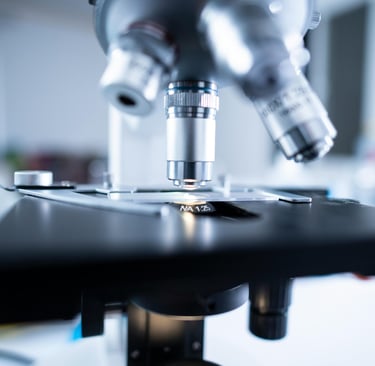
Under a microscope at 400x magnification, healthy soil is breathtaking — teeming with bacterial cells, fungal hyphae, protozoa, nematodes, and microarthropods. You can see the fungal networks connecting soil particles, bacterial colonies decomposing organic matter, and predatory organisms driving nutrient cycling. Unhealthy soil looks dead by comparison.
The microscope shows you directly whether your management practices are building biology or destroying it. Where you see broken soil biology under the microscope, you will find vulnerable plants in the field.
Research at institutions from Washington State to Texas A&M has documented induced systemic resistance — when beneficial soil microorganisms colonize plant roots, they prime the plant's entire immune system through the jasmonic acid and ethylene pathway. Studies on disease-suppressive soils show that after an initial disease outbreak, beneficial microbes build up and protect subsequent crops. The soil itself develops immunity.
The Leaf Has Its Own Immune System
Until about fifteen years ago, nobody in applied agriculture was teaching this, but every leaf, stem, and flower on your farm is colonized by a community of bacteria, yeasts, and filamentous fungi. This is called the phyllosphere microbiome, and it is a functional part of plant immunity — a third layer of defense on top of the plant's physical barriers and its induced hormone responses.
The phyllosphere community defends the plant four ways: it occupies space and nutrients a pathogen would otherwise colonize; it produces antibiotics and volatile compounds that suppress attackers directly; it primes the plant's own SAR and ISR responses; and as a whole community it produces emergent defensive properties more robust than any single biocontrol agent.
And here is the critical connection: the phyllosphere is recruited from the rhizosphere. Healthy soil biology produces quality root exudates, which assemble rhizosphere communities, which trigger ISR signaling, which assembles the leaf microbiome, which defends the above-ground tissues. Sohrabi and colleagues laid this chain out end to end in 2023. Stressed plants actually alter their root exudation to recruit specific protective microbes — and the induced plants then emit altered volatile compounds that prime the neighbors. The whole field communicates.
The farmer-facing implication is simple and consequential: you cannot separate soil biology from leaf immunity. Building rhizosphere function is building disease and pest resistance. There is no shortcut through foliar application that bypasses the soil.
Nature's Timeline vs Working Land
I've watched soil that was white — nearly devoid of organic matter — transform into some of the finest soil I work with today. I added nothing. I let it go wild with weeds for 5 to 10 years. The weed succession told the story: thistle dominated for years, that deep taproot breaking compaction, bringing up minerals, adding organic matter when it died. Each stage prepared the soil for the next.
That soil had the mineral elements — they were just locked up. The weeds slowly mobilized them. But I cannot tell my clients to let their farms rest for a decade. What I teach is how to steward nature's processes on productive land — how to accelerate the healing that nature would eventually accomplish, but do it while maintaining cash flow. We compress that 10-year succession into 2-3 years of intentional management. And if elements are truly deficient — not just locked up — we must add them.
This is the crucial difference between observing nature and partnering with it.
The Practical Path
Step 1: Assess — Read What Your Farm Is Telling You
Stop spraying long enough to ask questions. Where are pests appearing? Which varieties show disease first? These weak points show you where soil health is compromised.
Ask why weeds are here. Before you spray, understand what they're telling you. Thistle, dandelion, plantain, knotweed? Compaction. Dandelion, plantain, thistle, horsetail? Low calcium. Clover and vetch? Low nitrogen. Dock, buttercup, rush? Drainage problems. This isn't new knowledge — Pliny the Elder observed it in 50 AD. The weeds aren't the enemy; they're nature's diagnostic crew.
Test, don't guess. Get comprehensive soil testing: base saturation percentages, micronutrients, organic matter. Better yet, include biological assessment. The soil test reveals which elements are truly deficient versus locked up and unavailable. Biology can unlock what's there, but if an element is genuinely deficient, you must add it. And if it's excessive, you must adjust.
And scout for nutritional symptoms before pest symptoms appear. By the time aphids or mildew are visible, the nutritional failure is already a week old. Leaf chemistry and plant sap analysis are earlier signals and let you intervene before defense collapses.
Step 2: Chemistry First — Build the Foundation
You cannot skip this. Before biology, get soil chemistry into proper balance:
Correct calcium deficiencies with high-quality sources. Gypsum works without raising pH. Agricultural limestone works when pH adjustment is needed — but grind size matters (50% through 100-mesh screen minimum). Avoid calcium chloride.
Balance magnesium to proper ratios with calcium.
Adjust pH appropriately for your crops.
Address mineral deficiencies limiting biological activity — with particular attention to the defense-critical elements: manganese, boron, silicon, and zinc.
This is multi-year work, but you'll see improvements with each application. Test annually during transition, then every 2-3 years once balanced. Work with someone who understands the Albrecht system — ratios and relationships, not just sufficiency levels.
Step 3: Feed and Protect Biology
Every management decision: will this help or harm soil biology?
Tillage? Minimize or eliminate it. Every time you till, you're destroying fungal networks and disrupting the soil's redox potential — the energy state that favors beneficial microbes.
Fertilizers? Choose forms that feed biology. Soluble synthetics suppress biological activity through high salt index, bypass biological systems, and disrupt microbial communities. And remember the N-form principle: soluble nitrate dumps don't just fail to build defense — they actively degrade it by flooding tissue with the free amino acids that pests prefer.
Cover crops? Essential. Living roots year-round feed biology, prevent erosion, cycle nutrients. But diversity matters. A 5-10 species mix (legumes, grasses, brassicas, flowering species) mimics natural diversity and feeds different types of soil organisms.
Water management? Healthy soil structure dramatically improves water dynamics. Fields with strong soil health can absorb 2-3 inches more rainfall and hold it longer, providing drought resilience.
Sprays — including organic ones? This is the hardest conversation, and the one the peer-reviewed literature has finally made unavoidable. Copper, sulfur, hydrogen peroxide, bicarbonate, horticultural oils, and broad-spectrum botanicals are all antimicrobial on leaf surfaces. They do not distinguish between the pathogen and the resident defense microbiome. Every application strips the phyllosphere community, opens niches for opportunistic pathogens, and breaks the ISR signaling loops that maintain immunity. The result is spray dependency — the field loses its own immunity and needs the next application to replace what the last one killed. This is not an argument from purity. It is an argument from mechanism. If the phyllosphere microbiome is a functional part of the plant's immune system, then killing it weakens immunity, regardless of what the label says. Organic certification permits many sprays that do exactly this. ORCA's standard is higher because our framework is more complete. When intervention is unavoidable, use targeted microbial inoculants that add to the community rather than sterilize it.
Step 4: Monitor Plant Response
As soil health improves, plant response changes:
Brix levels rise as plants become more efficient. Research shows plants with Brix above 12 are significantly less susceptible to pests, and we now know why. Nutritionally balanced plants complete protein synthesis, locking nitrogen into structural and defense compounds. Imbalanced plants leave nitrogen stranded as soluble nitrate and free amino acids in the tissue and on the leaf surface — and those simple compounds are precisely what pest mouthparts and fungal pathogens are built to metabolize. Brix is a field-usable proxy for whether the plant has finished the job. A healthy plant literally isn't food for its attackers.
Leaf color and structure become more vibrant and robust. Pest and disease pressure declines noticeably. Yield and quality both improve — the economic payoff.
Document changes. Keep records. But always verify visual improvements with soil tests and, when possible, plant sap analysis. Soil chemistry data tells you what's happening below ground; sap analysis tells you whether the plant is actually converting that chemistry into defense-ready tissue.
What Success Looks Like
The transition isn't instant, but it's inevitable if you stay consistent:
First season: Reduced severity of outbreaks. Spray applications often drop 30-50%.
Second season: Notable improvements in soil structure and plant vigor. Problems become isolated rather than field-wide.
Third season and beyond: Fields that once required constant intervention start managing themselves. Beneficial insects establish. Disease resistance becomes the norm.
When you're no longer spending thousands per acre on pesticides, fungicides, and rescue fertilizers, your cost structure changes completely. When crops command premium prices because of superior quality, your revenue improves. The math works strongly in favor of foundational health.
Beyond immediate economics, foundational health promotes long-term resilience and risk mitigation. Healthy soils buffer against weather extremes — both drought and deluge. Diverse biological systems are more stable than simplified ones. Plants with functional immunity don't collapse when one pest pressure spikes. You're building redundancy and robustness into every aspect of production. In an era of increasing climate variability and market uncertainty, this resilience has real economic value.
But there's also something deeper: the satisfaction of working with natural systems rather than fighting them. Of seeing your soil improve year after year. Of growing crops that are genuinely healthy. Of knowing what you're building is sustainable for generations.
A Community-Based Approach
Let me be clear: this is a dynamic living system, and no single person masters all of it. The knowledge is too vast, the systems too complex. Depending on your project, I bring in specialists who've spent lifetimes in individual fields.
Regenerative agriculture is a grassroots movement — created by farmers, for farmers, tested across millions of acres, refined through shared experience. There is no "David King method." Nature is the principle; methods are tools. When you hire me as a consultant, you're accessing decades of collective knowledge and a network of specialists. ORCA, our nonprofit, exists to organize that network and bring the latest agricultural science to apprentices and farmers who need it.
The Path Forward
Pests, pathogens, and diseases will always exist. But they don't have to destroy your crops or your profitability. When you shift from symptomatic farming to foundational health, you stop being a victim and start being a manager of resilient systems.
It begins with soil chemistry. It's powered by soil biology. It is expressed through a two-tier plant immune system and a phyllosphere microbiome that modern science has now fully characterized. And it's available to every farmer willing to think differently.
The question isn't whether foundational health farming works — the results speak for themselves, and the mechanism is no longer in dispute. The question is whether you're ready to make the shift.
Nature has the answers. We just need to create the conditions.
Further Learning
The principles here are backed by decades of research. For those interested in diving deeper:
Books:
Francis Chaboussou, Healthy Crops: A New Agricultural Revolution (historical foundation — directionally correct, mechanistically superseded)
The Albrecht Papers (Volumes I–IV)
Brady and Weil, The Nature and Properties of Soils
Marschner, Mineral Nutrition of Higher Plants, 3rd edition — especially the chapter on nutrition, diseases, and pests
Key peer-reviewed papers:
Pieterse et al. (2014), "Induced Systemic Resistance by Beneficial Microbes," Annual Review of Phytopathology 52:347–375
Sohrabi et al. (2023), "Phyllosphere Microbiome: Diversity, Plant-Microbe Interactions, and Applications," Annual Review of Plant Biology 74:539–56
Organizations: Acres USA; your local NRCS office; regional farmer networks practicing regenerative agriculture.
Deep Dive Topics (coming in supporting blog series):
Test, Don't Guess: Why soil testing is non-negotiable
Reading Your Weeds: Free soil diagnostics
Calcium: The king of soil minerals
The Biological Engine: How soil organisms deliver nutrients
Cover Crop Diversity: Building biology below ground
And more...
Disclaimer: The information in this article is educational and based on principles of regenerative agriculture. Always consult with a qualified agriculture professional before making changes to your farming program.
David King is Executive Director of ORCA (Organic Regenerative Certified Apprenticeship) and owner of Surprise Valley Agroecology LLC, which provides consulting services in soil chemistry, biological farming, and regenerative agriculture transitions. For consulting inquiries, visit svafarm.com or contact svagroecology@gmail.com